



The Stations of the Cross refer to the depiction of the final hours of Jesus’ life, His Passion and Death. Although there were devotions on the Passion of Christ among Christians from the Fourth Century AD, the tradition of this devotion in places of worship is attributed to St. Francis of Assisi and became extended throughout the Roman Catholic Church in the medieval period.
The practice is less often observed in Anglican and Non-Conformist Churches. The devotions may be undertaken at any time and many churches have permanent Stations around their walls. The most common period of observation is during Lent and particularly during Holy Week, especially on Good Friday. The object of the Stations is to help the faithful to make a spiritual pilgrimage of prayer, through meditating on significant scenes of Christ’s sufferings and death.
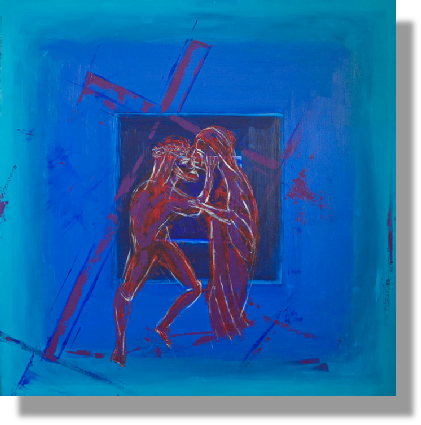
4. Jesus Meets His Mother
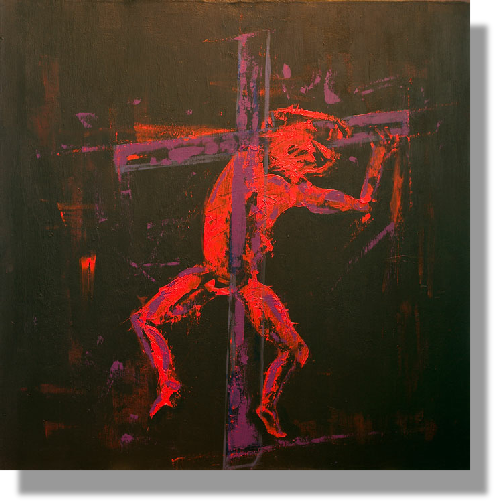
9. Jesus Falls for the Third Time
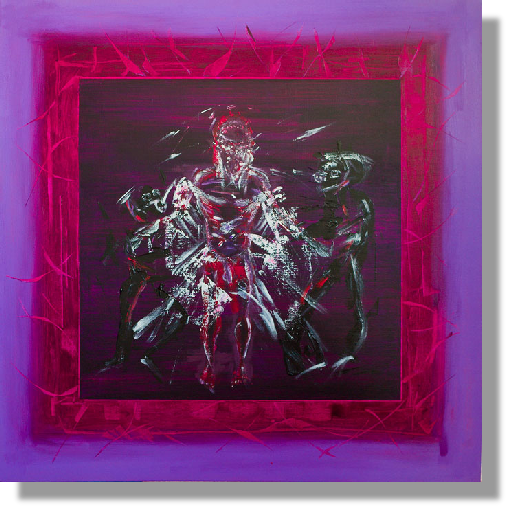
10. Jesus is Stripped of His Clothing.
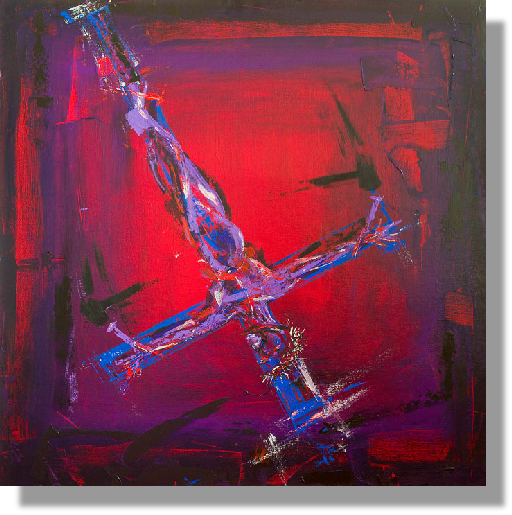
11. Jesus is Nailed to the Cross
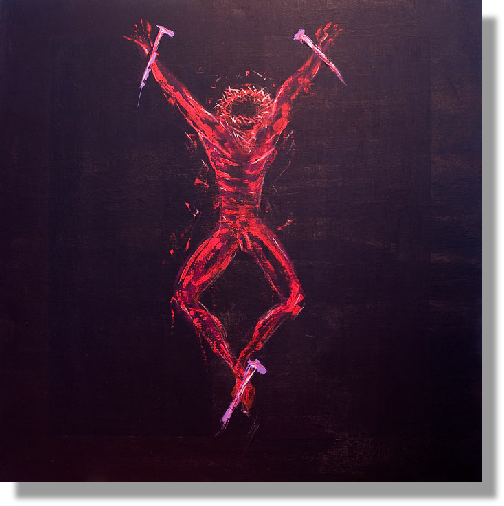
12. Jesus Dies on the Cross
WHY PAINT THE STATIONS OF THE CROSS?
This was an ambitious project, something which I’d pondered on over several years, but had set aside, feeling the challenge was too great. As an artist I wanted to depict the Way of the Cross, this journey of suffering and death in austere, raw and physical terms and yet too, portray something of grief, tenderness, compassion and dignity. My first attempt at working on the paintings came to nothing and after a year of much struggle and frustration I decided to abandon the whole venture. A few months later I was suddenly moved to begin again, and the direction became clear to me. These paintings were the result. I completed them in one month in 2009. It was a passionate and prayerful experience and confirmed my view that there is something greater at work than ourselves when we listen to the call of creativity within us.
‘The Stations of the Cross are not a procession. This work is the deepest drama of mankind. Faced with this drama, the artist cannot remain a spectator. He is obliged to take part in it.’ (Henri Matisse)
In human terms the Way of the Cross is a drama of violence, defeat, abject failure, pain and death; an expression of innocent suffering at an archetypal, individual and collective level. It is a drama for all ages and all peoples. When faced with the drama of the Cross we are called to search our hearts and to reflect on the nature of our very existence and being, of what it means to be both fully human and created in the image of an intimate God who loves us unconditionally and yet suffers in and with us.
Our broken world and its conflicts yearn more than ever for healing, justice, wisdom, compassion and love. In some way I hope these paintings touch and speak to everyone, of all faiths or none. That we might be challenged and enlightened to new ways of seeing and being, through the mystery of suffering, death, and Love itself.
Nigel Groom 2009 Great Malvern
(Revised Abbotskerswell 2020)
The Stations Of The Cross
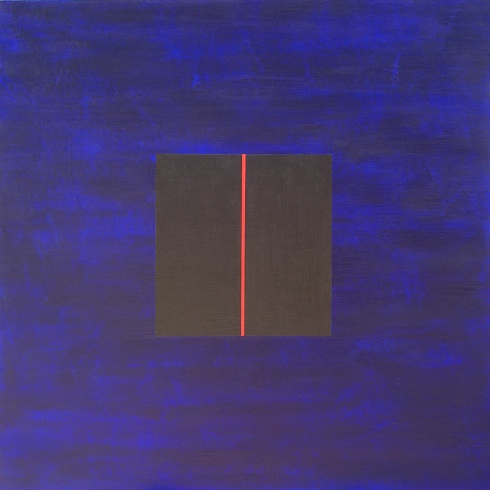
14. Jesus is Laid in the Tomb
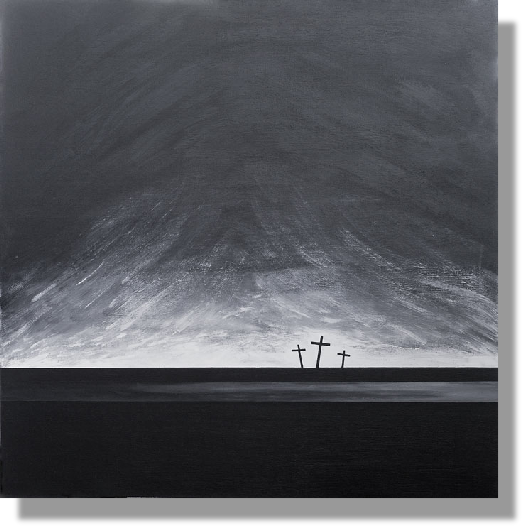
14. Jesus is taken down from the cross
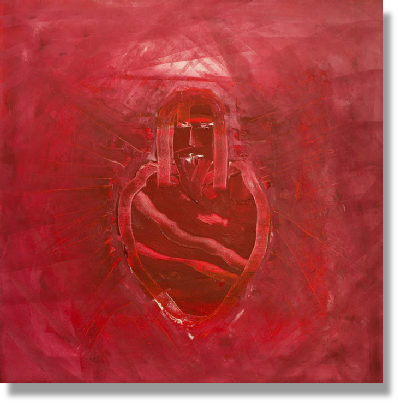
1. Jesus is condemned to death

2. Jesus is made to Carry His Cross
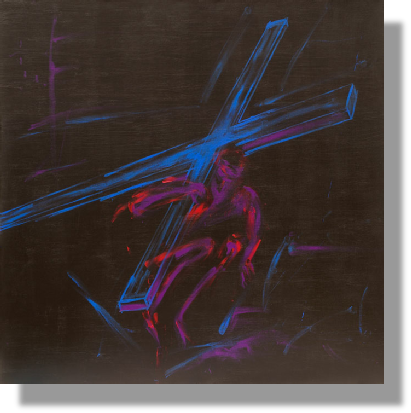
3. Jesus Falls for the First time
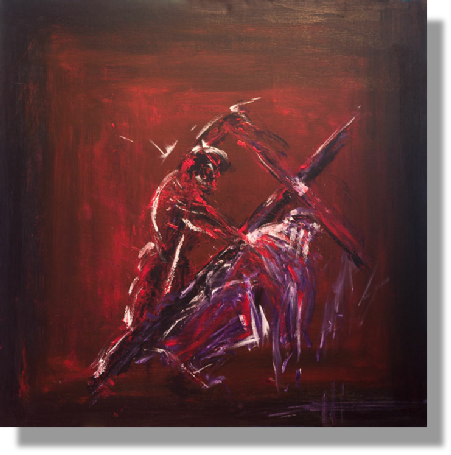
5. Simon of Cyrene helps Jesus Carry The Cross
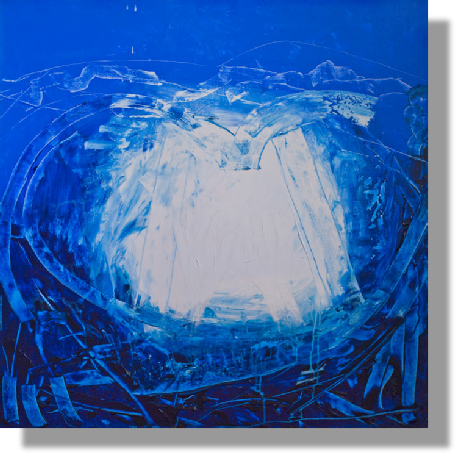
6. Veronica Wipes the Face of Jesus
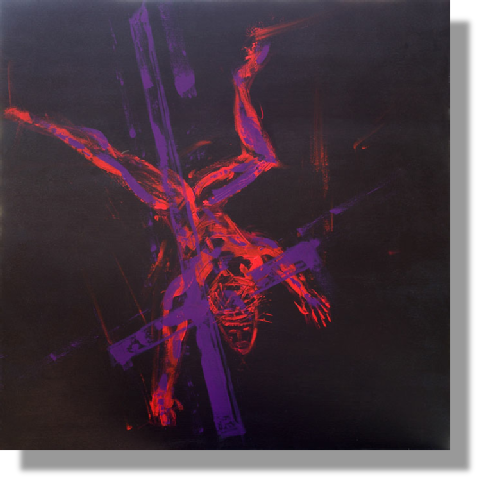
7. Jesus falls for the second time.
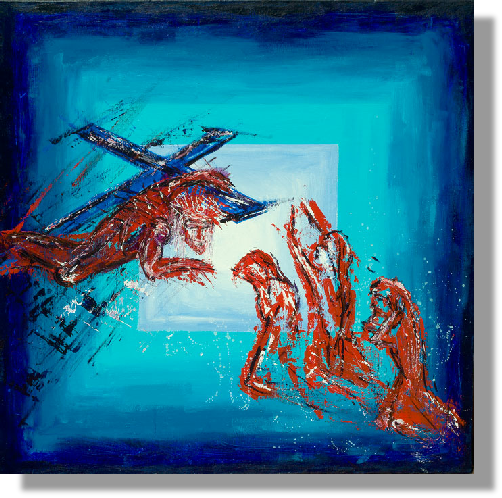
8. Jesus Meets the Women of Jerusalem
.jpg)