




Occasional
As you look through the pictures feel free to click on any to see a larger version of them. Many of the pictures have information written below so you can get a feel for how a particular piece was conceived and made in to reality.




Guardian Angels
VOYEURS
“Everything you can imagine is real.”
―Pablo Picasso
DIANA – QUEEN OF HEARTS
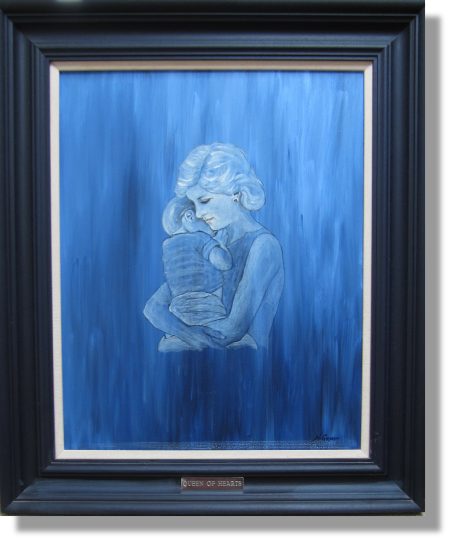
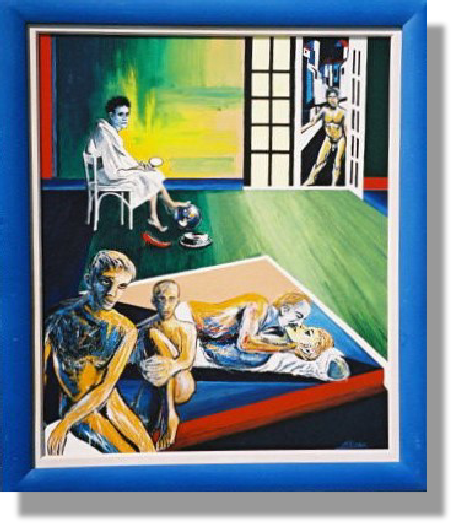
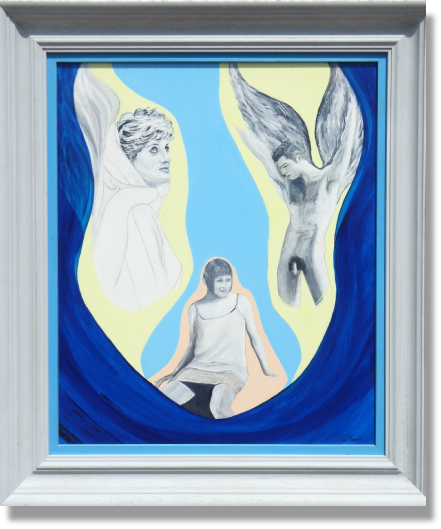
Artist: Nigel Groom
Medium: Acrylic on canvas board
Dimensions: 60cmsx54cms (unframed)
Date: 2000/1
Acrylic on canvas 1993/5
Acrylic on canvas 1993/5
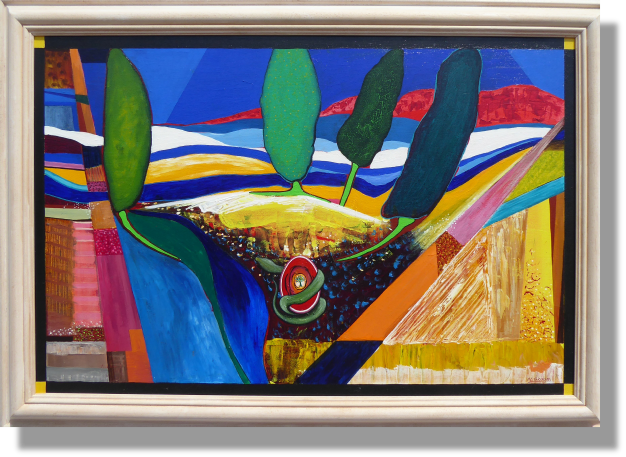
THE BIRTH OF THE COSMIC TREE
From my own perspective as a Jungian the Mythology of the Cosmic Egg is of Archetypal significance in understanding the development of the human Psyche, both individually and collectively. My painting shows the Orphic Egg bearing the fruit of the Tree of the Cosmos entwined with the serpent, amongst other things, age-
As an introduction here is a YouTube clip:
The Birth of the World Tree from the Cosmic Egg
The Cosmic Egg is one of the most prominent icons in world mythology. It can be found in Egyptian, Babylonian, Polynesian and many other creation stories. In almost all cases, this embryonic motif emerges out of darkness, floating upon the waters of chaos. Within this egg typically resides a divine being who literally creates himself from nothing (AKA The ex nihilo). This creator then goes on to form the material universe.
This ‘ex nihilo’ creator either uses the material within the cosmic egg shell, or the substance of chaos to bring shape and order to the world. The tricky question is however, what came first, the god or the egg. In some myths, this egg has a maker, often a woman, who brings the creator god into existence.
For instance, in the Pelasgian myth of creation, Eurynome (a version of the Greek Gaia) lays the world egg on the waters of chaos and orders a cosmic snake ‘Ophion’ to encircle it until it hatched the world itself.
In the Finnish creation epic, the Kalevala, the world is created from the fragments of an egg laid by a duck on the knee of Ilmatar, the primordial sea goddess. The bird laid six golden eggs and one iron one. When Ilmatar moved her leg, the eggs fell into the sea and broke, the pieces becoming land, sky, stars, and sun.
In Zoroastrian tradition, Ohrmazd (the almighty god) created the world from chaos. He gathered the turbulent material and formed it into a great egg. From the upper part of its shell he formed the sky, and from the lower half he forged the earth. He then filled the lower part of the shell with primeval waters and set a flat earthen disk on top of it.
In Slavic mythology, Rod, the supreme being, created a divine egg from the void, inside of which rested Svarog, god of fire. As his life force grew, the egg cracked open. The lower shell became the earth and sea, out of which a grew a world tree, pushing the upper shell skyward, creating the firmament.
One Chinese creation myth describes a huge primordial egg containing the primal being Pangu. The egg broke and Pangu then separated chaos into the many opposites of the yin and the yang, that is, into creation itself.
Ancient Egyptians saw the cosmic egg as the soul of the primeval waters out of which creation arose. In one story the sun god Ra emerged from the primeval mound, itself a version of the cosmic egg resting in the original sea.
The Polynesian Tahitians have a myth in which the god Ta’aroa began existence in an egg and eventually broke out to make part of the egg the sky. Ta’aroa, himself, became the earth.
The later Orphic cult in Greece preached that in the beginning there was a silver cosmic egg, created by Time that hatched the androgynous being who contained the seeds of creation.
The Hindu scripture, there is a story primordial maternal waters of the pre-
The later Orphic cult in Greece preached that in the beginning there was a silver cosmic egg, created by Time that hatched the androgynous being who contained the seeds of creation.
In Africa a Dogon myth says that in the beginning, a world egg divided into two birth sacs, containing sets of twins fathered by the creator god, Amma, on the maternal egg. Some say that Amma was the cosmic egg and fertilized himself.
In Japanese mythology, creation begins with the world as a chaotic, formless mass. Then an indefinable sound filled the void, setting the particles in motion which form into an egg. The lighter particles rose upward forming Heaven, while the heavier particles coalesced into a heavy, dense mass and became the Earth.
Finally, in Bantu Mythology, the earth was said to have derived from an egg. The upper half of the shell became heaven, including the god on high who presided over it, while the lower coalesced into the earth and its primordial mother. From both halves developed the sun, stars, trees and animals.
The Cosmic Egg is a metaphor of potentiality. It is the pre-
The Cosmic Egg: She who is the Divine Feminine
The cosmic egg is the core symbol of the divine feminine’s creative force. It is a spiritual motif found in the creation myths of countless cultures and civilizations. It represents a birth, a new beginning, or an expansion of life.
In the Rig Veda, one of the older texts in any Indo-
In Greek mythology, the Orphic egg hatched the primordial hermaphroditic deity who then created all the gods and the goddesses. It is depicted as an egg with a serpent wrapped three times around it.
In Egyptian, Chinese, and Polynesian mythologies among many others, creation begins with an egg. And in the Christian tradition, Mary Magdalene used the egg to describe how life begins again after death.
In modern cosmology, it is believed that 13 billion years ago the entire mass of the universe was compressed into a gravitational singularity, the so-
(Sources en.wikipedia.org
link.springer.com
divine sanctuary.net)
Artist: Nigel Groom
Medium: Acrylic on canvas
Dimensions: 104cmsx74cms
Date: 1998
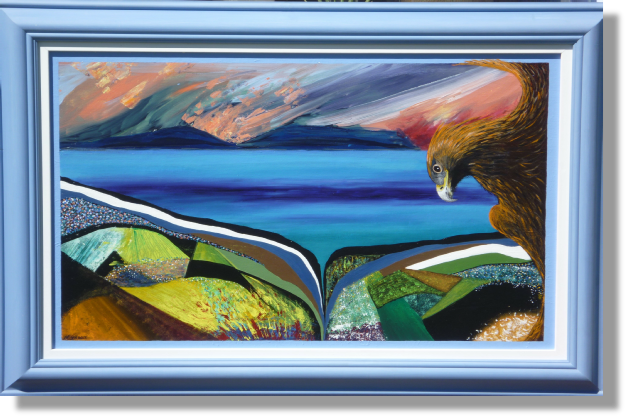
ST JOHN’S FIRE
Artist: Nigel Groom
Medium: Acrylic on canvas
Dimensions: 104cmsx74cms
Date: 2002/3
My painting is inspired by the islands of Orkney which I have visited over many years coinciding with the St Magnus Festival at midsummer founded by our dear friend Sir Peter Maxwell Davies RIP.
Saint John's Eve, starting at sunset on 23 June, is the eve of celebration before the Feast day of Saint John the Baptist. The Gospel of Luke (Luke 1:26–37, 56-
The Feast of Saint John closely coincides with the June solstice, also referred to as Midsummer in the Northern Hemisphere. The Christian holy day is fixed at 24 June, but in most countries festivities are mostly held the night before on Saint John's Eve. Fire is the most typical element associated with the Saint John's Eve celebrations. In many countries, bonfires are lit on the evening of 23 June for people to jump over.
(Notes wikipedia)
Here is the youtube clip of “Max’s” Orkney Wedding
with Sunrise
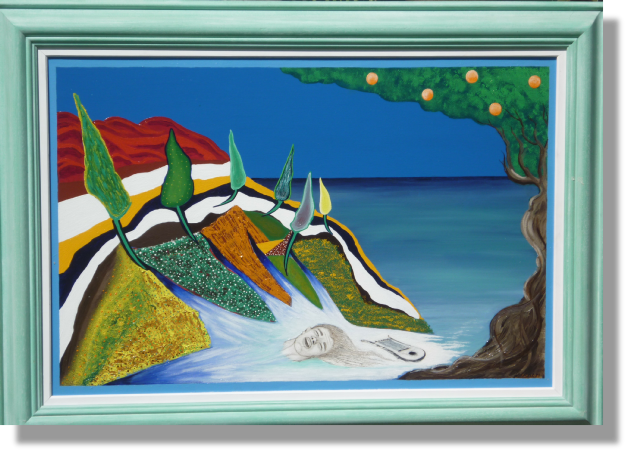
Artist: Nigel Groom
Medium: Acrylic on canvas
Dimensions: 104cmsx74cms
Date: 2002/3
The painting draws on the last part of the Greek Myth of Orpheus and depicts his head floating together with his lyre in the sea. The motive and manner of his death vary in different accounts of the mythology but the earliest says that the Furies (female followers of the god Dionysos) tore him to pieces in a Bacchic orgy because he preferred the worship of Dionysos’ rival, the god Apollo.
His head, still singing, with his lyre, floated to the island of Lesbos, where an oracle of Orpheus was established. The head prophesied until the oracle became more famous than that of Apollo at Delphi, at which time Apollo himself bade the Orphic oracle to stop. The dismembered limbs of Orpheus were gathered up and buried by the Muses. His lyre they placed in the heavens as a constellation.
(Notes Encyclopedia Brittanica)
Here is the youtube clip of Igor Stravinsky’s ballet music
for Orpheus
ORPHEUS
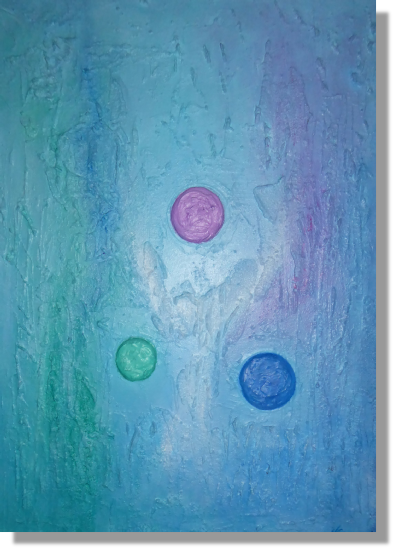
EUCHARIST
Artist: NIGEL GROOM
Medium: Acrylic/impasto on canvas
Dimensions: 40x56cms
Date: 2003

EXPERIENCE 2
Acrylic on deep edge canvas
100cmsx50cms
2005
.jpeg)
MOONRISE
Acrylic on canvas
51cmsx41cms
2005
WATER MUSIC in four movements
As you look at my paintings listen to what
Abbado and the Berlin Philharmoniker do
with the finale of Debussy’s glorious “La Mer” (The Sea)
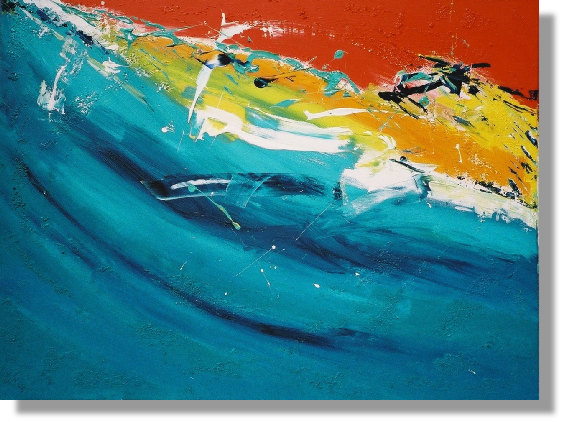
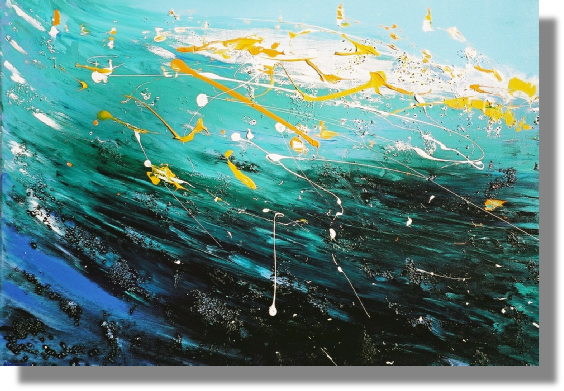
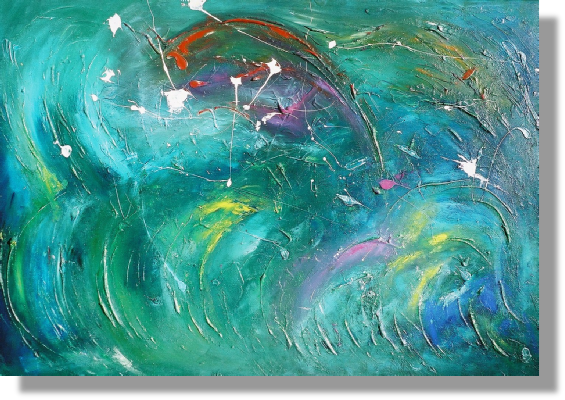
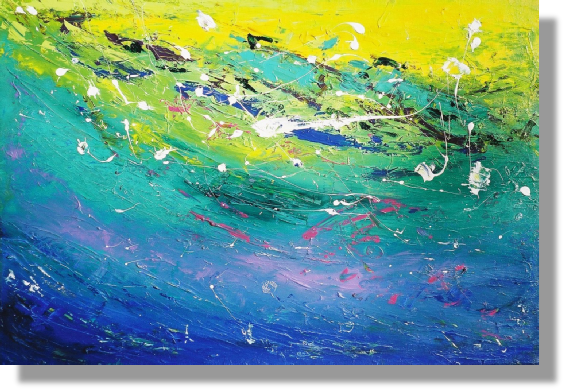
Acrylic on canvas
100cmsx70cms
2005
1
2
3
4
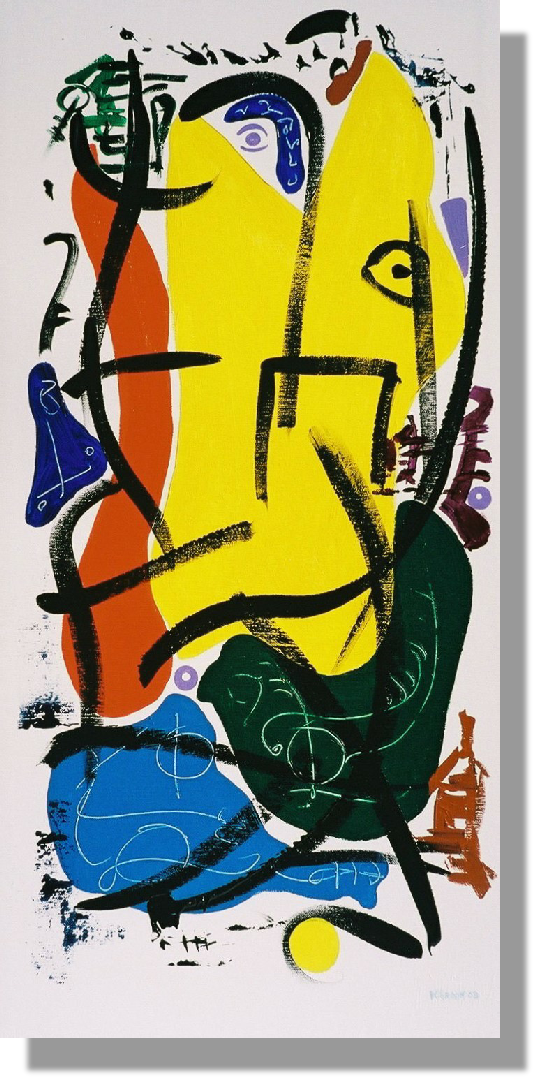
CATZEYE
Acrylic on canvas 80x40cms
2003
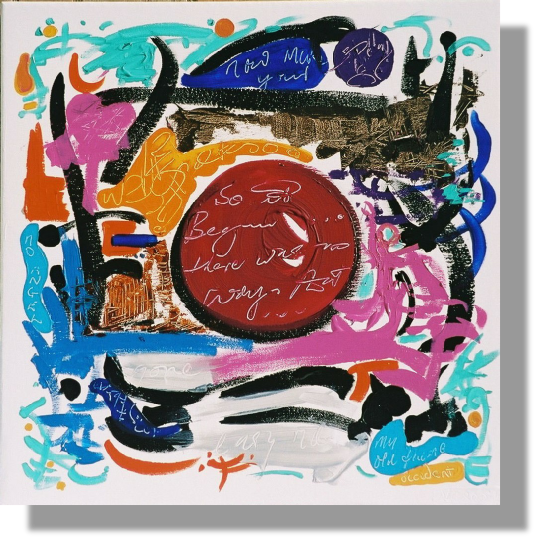
EASY RIDER– MAE WEST
60x60cms
2003
60x60cms
2003
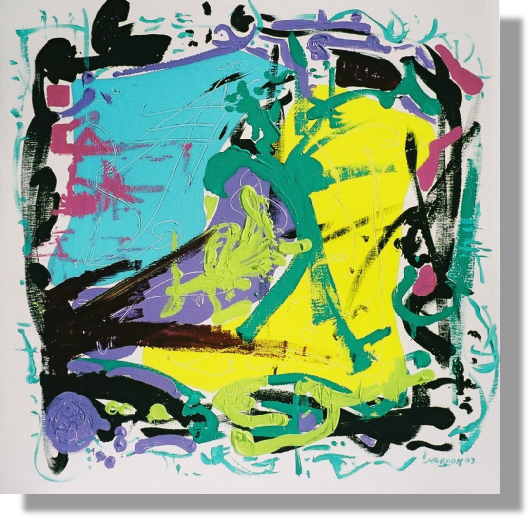
GREEN MAN DANCING
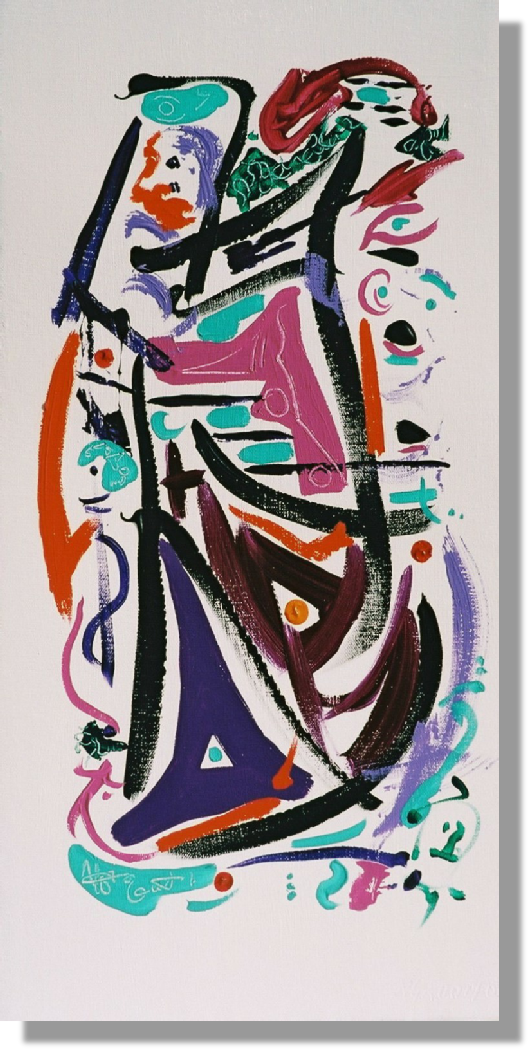
MAKEUP
60x30cms
2003
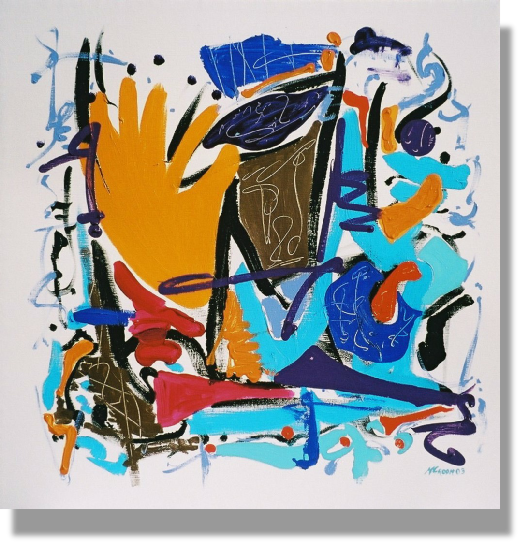
THE DEAL
70x70cms
2003
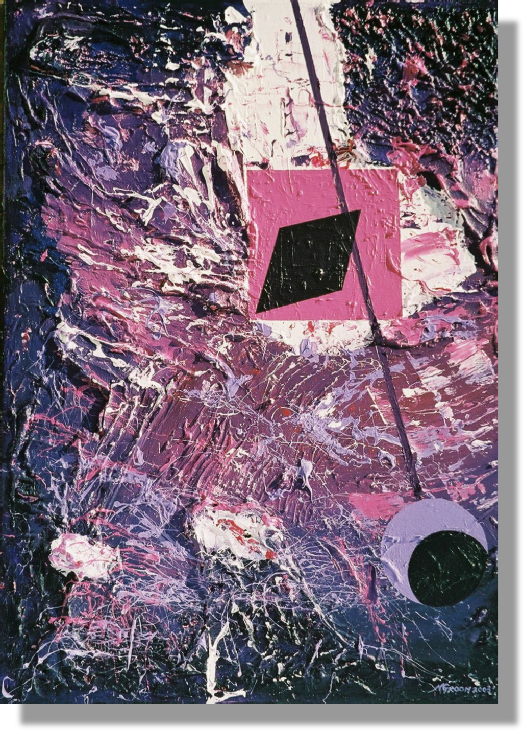
EXPLOSANTE FIX 1
Acrylic/impasto on canvas
56x41cms
2003
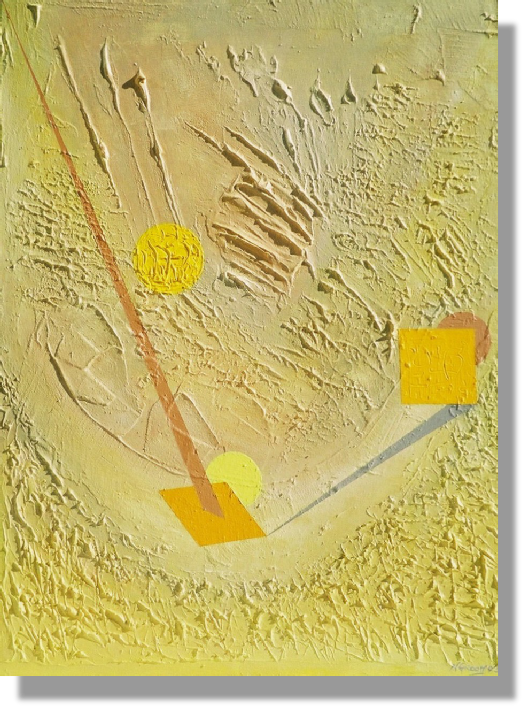
EXPLOSANTE FIX 2
Acrylic/impasto on canvas
62x47cms
2003
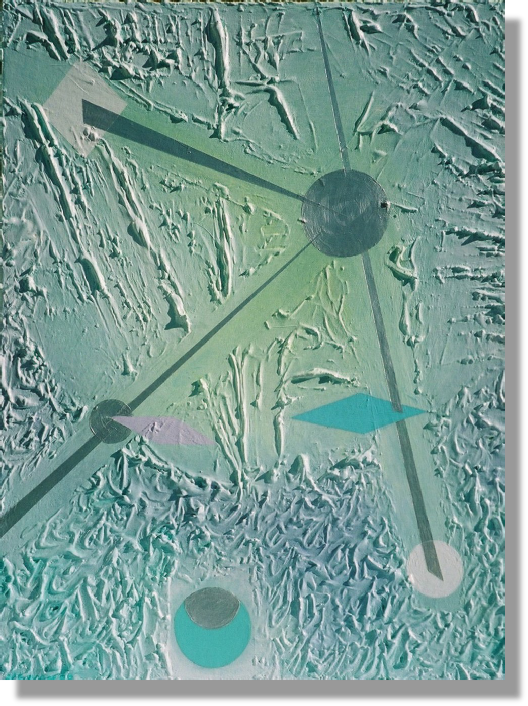
EXPLOSANTE FIX 3
Acrylic/impasto on canvas
62x47cms
2003
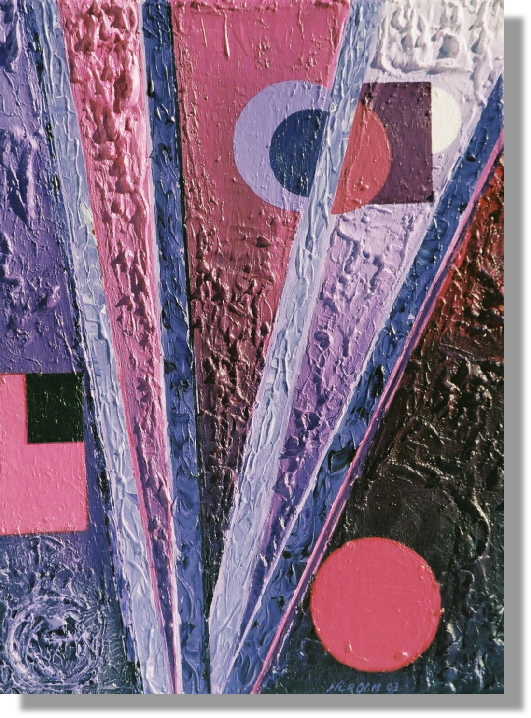
STUDY IN PURPLE
Acrylic/impasto on canvas
56x41cms
2003
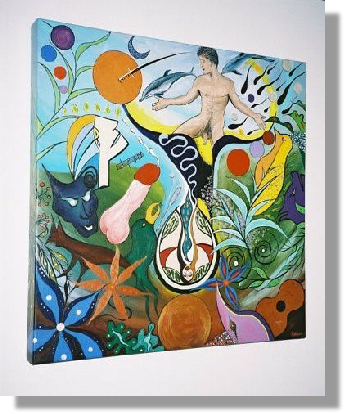
TREE OF LIFE
Acrylic on deep edge canvas 60x60cms (Private commission)
STILL POINT IN BLUE
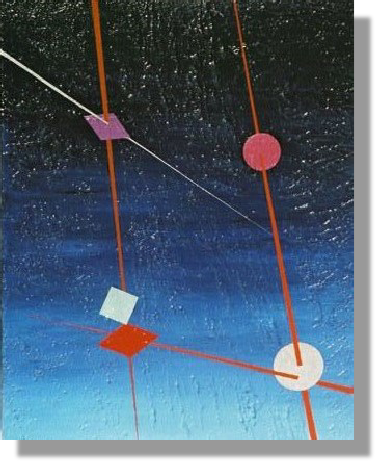
Acrylic/impasto on canvas 50x40cms
EASTERN SUN
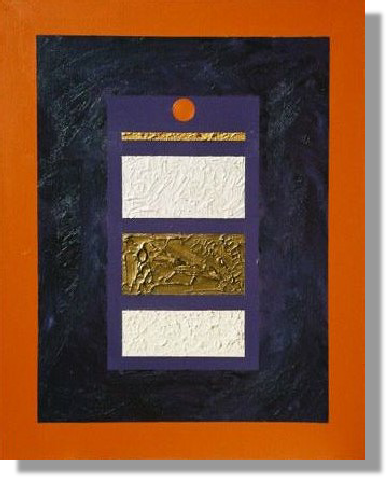
Acrylic/impasto on canvas 76x60cms
BEETHOVEN’S 10TH
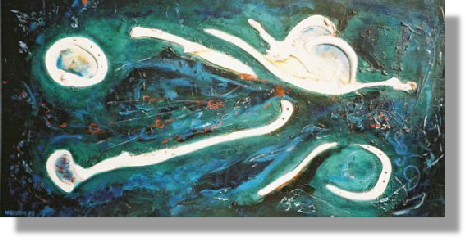
Acrylic/impasto/deep edge canvas 80x40cms

FIVE PRESENCES (2003)
1 BLUE
2 GREEN
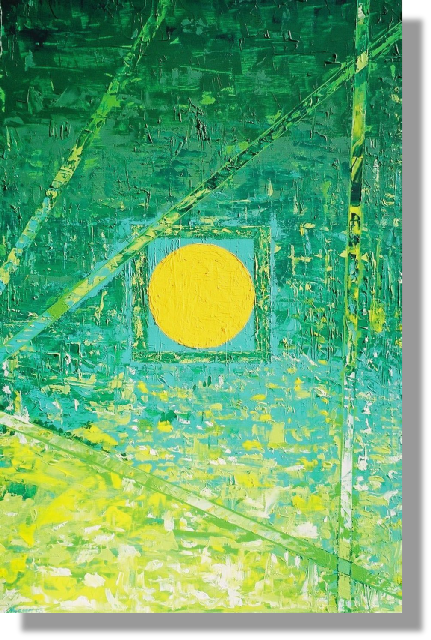
3 ORANGE

4 PURPLE
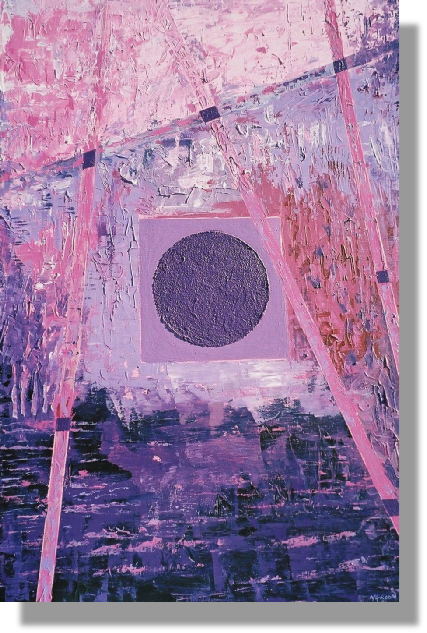
5 RED
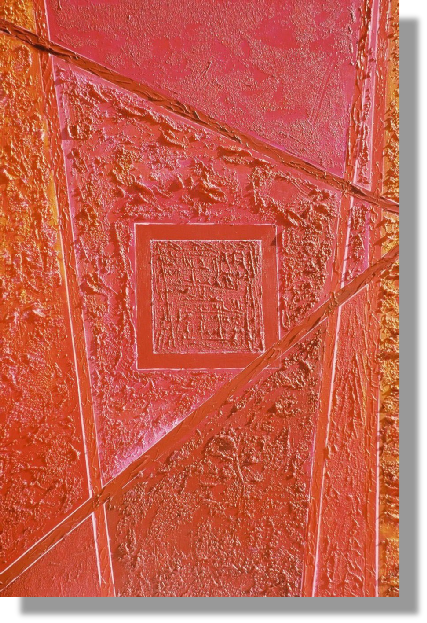
Acrylic on canvas each
90x60cms
2003
Reflect on these paintings with Arvo Part’s Cantus In Memoriam Benjamin Britten, beautifully played by played by the Orchestre de Paris conducted by Paavo Jarvi
WRITING ON THE WALL
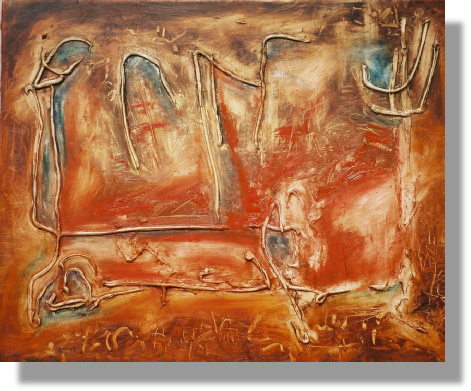
Oil/Impasto on deep edge canvas
76x61cms
2005
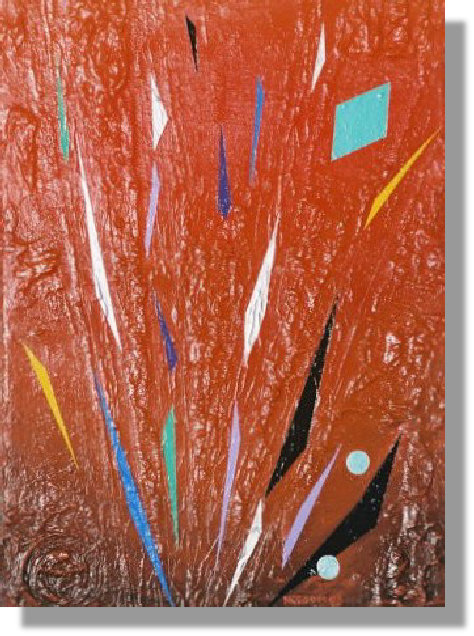
EXPLOSANTE
Acrylic/Impasto on canvas
56x40cms
2003
FREEFALL 1 AND 2
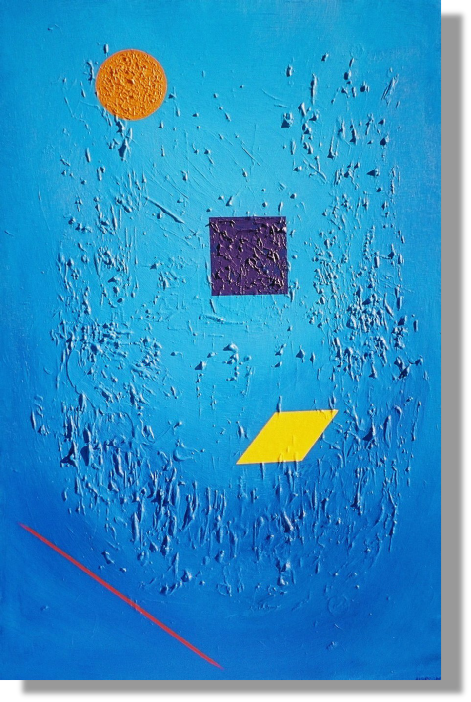
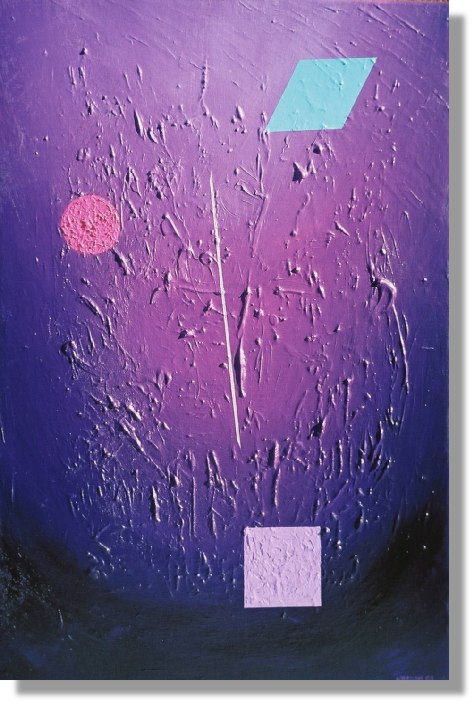
Acrylic/Impasto on deep edge canvas
90x60cms
2003
LES QUATRES PRINCESSES
(The Four Princesses)
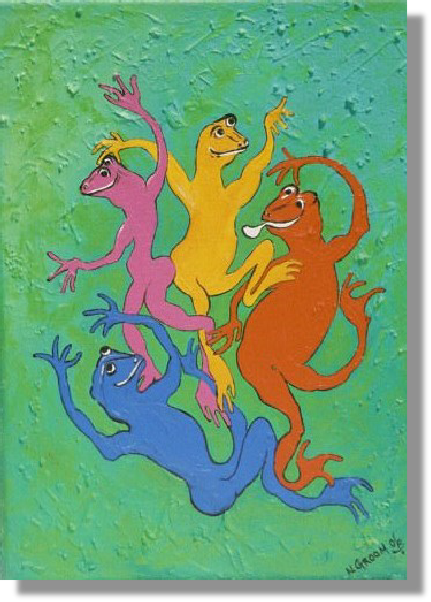
I painted this as a gift for two dear friends who at the time lived in Nice.
They have a passion for everything to do with frogs so we named each of
the princesses in the painting after our own nicknames as two couples,
Virginie and Zucchini, Nigella and Hervé.
Acrylic on canvas
36x25cms
2006