Following the seven Visions of the Amen completed earlier in July this new painting is based on the words of a carol by the American composer, Morten Lauridsen, celebrating the Mystery of the Incarnation. It is usually associated with the Nativity.
I completed it on 17th July to commemorate the Feast of the Compiegne Martyrs, the Carmelite nuns guillotined during the French Revolution.
Here is the youtube link to the carol by Morten Lauridsen
In tribute to the Compiegne Martyrs please follow the youtube link to the finale of Poulenc’s Opera Dialogues du Carmelites
as the nuns go to their deaths singing the Salve Regina
SALVE REGINA
Salve, Regina, Mater misericordiæ,
vita, dulcedo, et spes nostra, salve.
Ad te clamamus exsules filii Hevæ,
Ad te suspiramus, gementes et flentes
in hac lacrimarum valle.
Eia, ergo, advocata nostra, illos tuos
misericordes oculos ad nos converte;
Et Jesum, benedictum fructum ventris tui,
nobis post hoc exsilium ostende.
O clemens, O pia, O dulcis Virgo Maria.
English Translation
Hail, holy Queen, Mother of Mercy,
Hail our life, our sweetness and our hope.
To thee do we cry,
Poor banished children of Eve;
To thee do we send up our sighs,
Mourning and weeping in this valley of tears.
Turn then, most gracious advocate,
Thine eyes of mercy toward us;
And after this our exile,
Show unto us the blessed fruit of thy womb, Jesus.
O clement, O loving,
O sweet Virgin Mary.
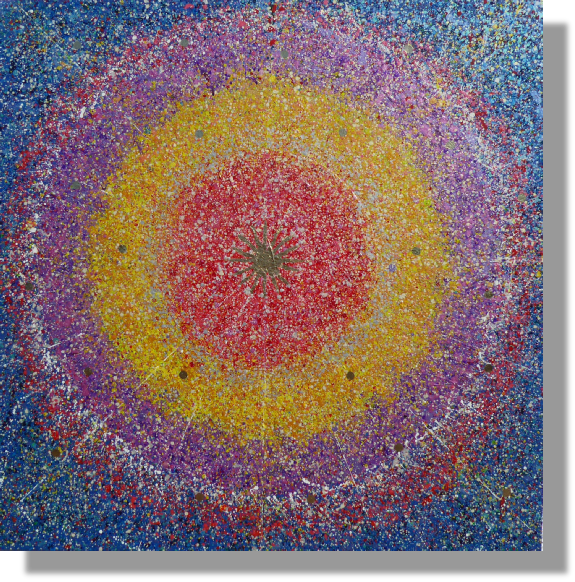
IN PARADISUM DEDUCANT ANGELI
Title: IN PARADISUM DEDUCANT ANGELI
Artist: Nigel Groom
Medium: Acrylic/acrylic ink/gold leaf
on deep edge canvas
Dimensions: 90cmsx90cms
Date: July 2020
The “In Paradisum” from Maurice Durufle’s Requiem
provides a moment to reflect on my painting.
Please watch the youtube video below
REQUIEM: IN PARADISUM
In paradisum deducant angeli
In tuo adventu suscipiant te martyres
Et perducant te
In civitatem sanctam Jerusalem
Chorus angelorum te suscipiat
Et cum Lazaro, quondam paupere
Aeternam habeas requiem
May angels lead you into paradise
Martyrs receive you at your arrival
And bring you
To the holy city Jerusalem
May the choir of angels receive you
And with Lazarus, once a pauper
May you have eternal rest

Latest Work
As you look through the pictures feel free to click on any to see a larger version of them. Many of the pictures have information written below so you can get a feel for how a particular piece was conceived and made in to reality.
Title: Visions of the Amen (Visions de l’Amen)
Artist: Nigel Groom
Medium: Acrylic/inks/foil/gold leaf
Dimensions: 7 paintings each 60cm x 60cm
Date: April/June 2020
These were inspired by a suite of music for two pianos by the French composer, Olivier Messiaen, entitled “Visions de l’Amen” (Visions of the Amen).
The idea to paint these has been very much incubating with me over several years, and from time to time I have been aware of this idea pressing on me to heed to what is being asked of me. When the recent covid19 “lockdown” took place it felt prescient to bring these seven images to birth in my response to the music.
I feel these paintings express joy and are a celebration of life itself, a summation of faith and an honouring of ultimate things. The project took seven weeks to complete and the seventh painting the “Amen de la consommation” (Amen of the Consummation) was finished on Trinity Sunday, which somehow seems auspicious.
The paintings speak for themselves but I am grateful to an anonymous writer whose words I came across on my researches. This text is an excellent supplement to understanding Messiaen’s exotic, challenging, evocative and celebratory music.
Three of the paintings have youtube music clips you may wish to access, one for each of
The Amen of the Creation (I)
The Amen of Desire (IV)
The Amen of the Consummation (VII)
You may also note that my realisation of the Amen of the Consummation draws on the structure of the Enneagram. For an explanation of the Enneagram please see the text which accompanies this painting.
Whilst it is not absolutely necessary to be acquainted with the music in order to enjoy the paintings, nor necessarily that you understand what the music is doing, I think hearing the music can be enriching in the overall experience.
Nigel Groom (June 2020)
Visions of the Amen
Messiaen’s Visions de l’Amen (Visions of the Amen)
Olivier Messiaen (1908–92), was the most distinguished and influential French composer of his generation. He was able to combine huge technical expertise with direct musical expression that made him quickly accessible to a large public.
He was a passionate and devout Roman Catholic, and virtually everything he wrote relates to his faith. For over sixty years he was the regular church organist at l’Église de la Trinité in Paris. Friends said it was obvious he possessed a profound joy.
His musical language is quite distinctive. So we can’t expect to hear the kind of song we might typically have on our playlist; he wants us to hear new sounds. Nor is this background music – he is asking you to give him your full attention.
Messiaen thinks in visual terms – he uses sounds to paint pictures, to evoke colourful images. When he was ten years old he gazed at the dazzling stained glass windows of Saint Chapelle in Paris, and the effect was life-
The Music
Visions de l’Amen is a piece for two pianos. It was written in 1943, right in the middle of the second world war, when France was occupied by the Germans. Messiaen had been a prisoner of war, and this was the first thing he wrote after being released. One commentator called it “a defiant affirmation of faith in the face of man’s inhumanity.”
The second piano has the big tunes, the main themes, and the first piano has most of the sparkling virtuosity. The first piano part was written for his pupil Yvonne Loriod whom he later married.
“Amen” has various meanings – but the commonest basic idea is that of “Let it be!” or affirmation. The overall mood of the work is celebration.





And God said “Let there be light!” The “theme of creation” arises from the dark depths, steady, solemn and hymn-
This is basically an enormous crescendo. The second piano plays what is basically a hymntune, what Messiaen calls the “creation theme.” It is so low to begin with you can’t really make it out, but it slowly rises and becomes clearer and clearer. The first piano plays sparkling chords over and over again. Messiaen is envisioning the creation of light, and everything becoming clearer as the light grows.
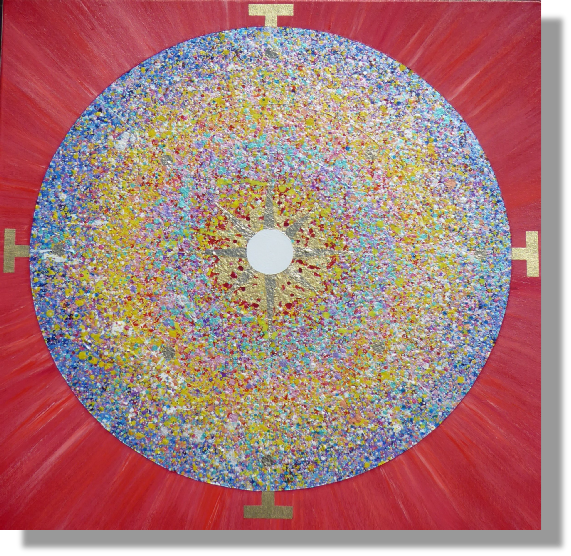
In the garden, sweating with blood, we hear Jesus’ agonised “Let it be” to his Father: “My Father, if this cup may not pass away from me, except I drink of it, thy will be done.”
Christ takes to himself the suffering and anguish of humanity. He cries out, laments, sighs, sweats blood. This is the way of the cross, transcendence and re-
We are in the Garden of Gethsemane. Various themes correspond to different elements of Jesus’ agony, but don't worry about trying to identify them all. Note the mournful tone, the harsh tension sighing and crying, the extreme dissonance.
Towards the end, everything suddenly falls silent. The single repeated bass notes represent Jesus’ drops of sweat like blood. Then we hear the creation theme from the first movement again; Messiaen believed that in Christ, human nature was being re-
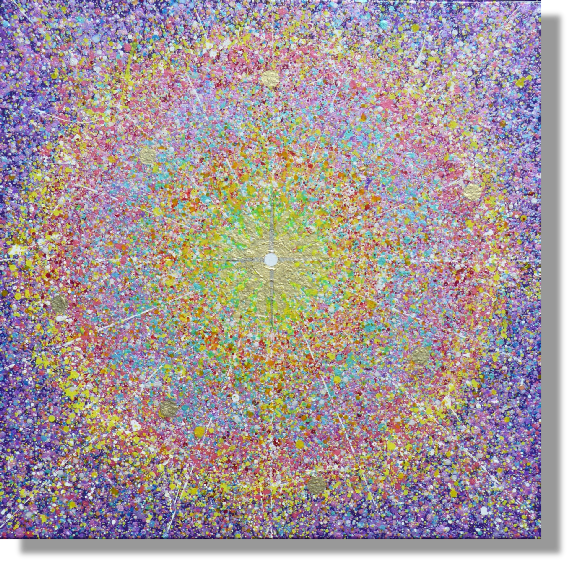
Divine love evokes an “Amen” from the soul: a desire for communion with God. We hear the profound tenderness and tranquility of the harmonious paradise which beckons, and the intense and passionate human yearning for that glorious fulfillment.
This is probably the most immediately appealing of all the movements. The opening passage, which re-
The in-
V. Amen des anges, des saints, du chant des oiseaux (“Amen of the Angels, of the Saints, of Bird Song”)
Transparent and effortless, the angels and saints offer their “Amen” of praise to God in pure song. Nightingales, blackbirds, finches and warblers, join the ecstatic vocal chorus of unselfconscious adoration.
This is full of charm. It starts with a chant, moves through a hymn, and includes evocations of bird-
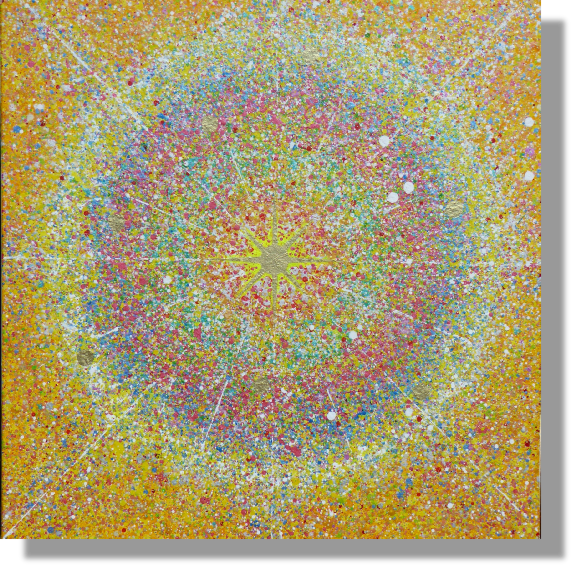
Transparent and effortless, the angels and saints offer their “Amen” of praise to God in pure song. Nightingales, blackbirds, finches and warblers, join the ecstatic vocal chorus of unselfconscious adoration.
This is full of charm. It starts with a chant, moves through a hymn, and includes evocations of bird-
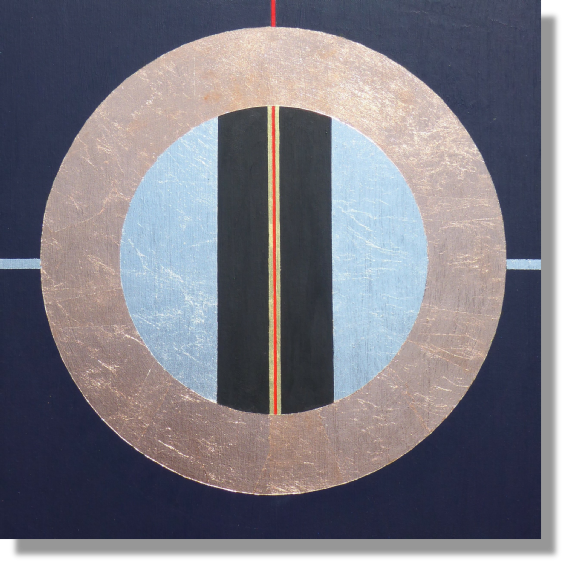
God’s “Let it be” takes the form of judgement. The severity of the verdict on those who spurn God’s love is played out with rhythmic austerity, transparency and total clarity.
This is the shortest of the movements. Messiaen brings out the harsher side of judgement – through the repetition of hammer-
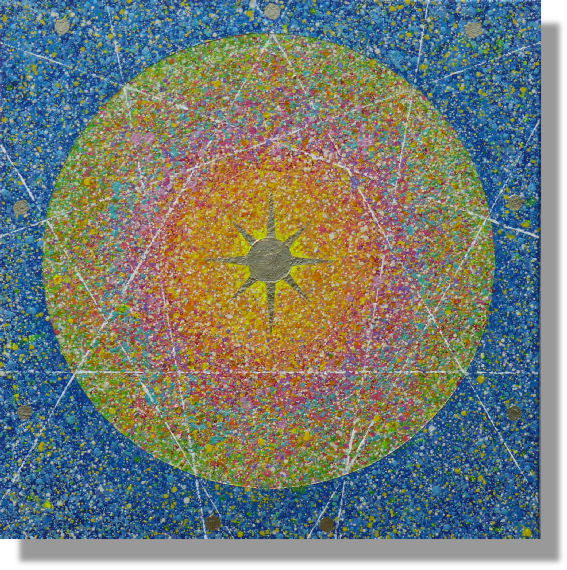
The dazzling culmination of the created world promised in Christ – God’s final “Let it be,” in which all things find their dance-
Here Messiaen is having fun again, on a huge scale. The creation theme returns, and is repeated at various pitches. We are in the midst of the new creation, and he conveys the impression of infinite expansion and possibility. On top of the creation theme, the first piano seems to be playing with sound, as an infant might try to play at the top of the piano while someone else plays lower down. The ending is spectacular, and the movement as a whole lends itself wonderfully to visual interpretation.
(Author of the above notes anon.)
What is the Enneagram?
(The Amen of the Consummation (VII) in my realisations of the Visions de l’Amen is based on the structure of the Enneagram).
Enneagram figure
The enneagram figure is usually composed of three parts; a circle, an inner triangle (connecting 3-
The Enneagram is an archetypal framework that offers in-
The Integrative Enneagram creates self-
As a framework, the Enneagram also speaks to the journey of integration and development in a profound way. It is able to uncover the uniqueness of each individual and his/her journey. It does not only reveal what holds an individual back, but also offers insights into the journey towards strength and liberation, connecting us to our strengths and higher selves.
The Enneagram is, therefore, a sense-
History of the Enneagram
We don’t know the exact origin of the Enneagram, but we do know it has an eclectic history. Some assume ancient roots in Babylon around 4,500 years ago while others place the origin in classical Greek philosophy around 2,500 years ago. The model has been attributed to the Jewish Kabbalah, Christian mysticism and Sufism, a mystical form of Islam. Dante apparently had very good knowledge of the Enneagram since the characters in The Divine Comedy correspond largely to the Enneagram types.
What we do know, is that the modern Enneagram system is the work of contemporary authors. Georg Ivanovich Gurdjieff, a mystic and spiritual teacher, introduced the model as a spiritual symbol in the 1930s, and it arrived on American shores in the 1960s.
Applications of the Enneagram
The Enneagram is mostly used for personal self-
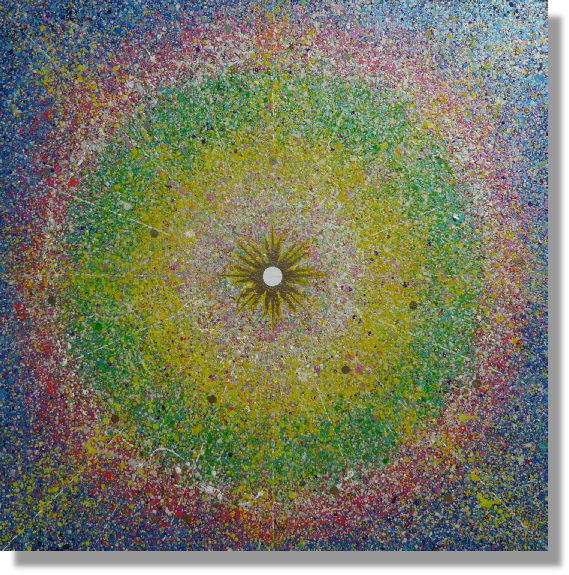
“The job of the artist is always to deepen the mystery.”
(Francis Bacon)
Artist: Nigel Groom
Medium: Acrylic/ink/gold leaf
Dimensions: 90cmsx90cms
Date: July 2020
O magnum mysterium,
et admirabile sacramentum,
ut animalia viderent Dominum natum,
iacentem in praesepio!
Beata Virgo, cujus viscera
meruerunt portare
Dominum Iesum Christum.
Alleluia!
O great mystery,
and wonderful sacrament,
that animals should see the newborn Lord,
lying in a manger!
Blessed is the virgin whose womb
was worthy to bear
the Lord, Jesus Christ.
Alleluia!
O MAGNUM MYSTERIUM
I. Amen de la Création (“Amen of the Creation”)
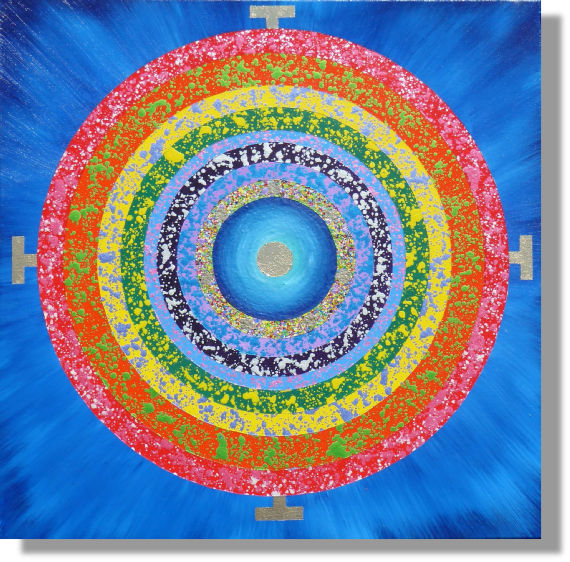
We join an unstoppable astronomical turbine, a ferocious, uncontainable dance. The multi-
This is Messiaen having fun. Most things in this movement come from a five-
II. Amen des étoiles, de la planète à l’anneau (“Amen of the stars, of the ringed planet”)
III. Amen de l’agonie de Jésus (“Amen of the Agony of Jesus”)
IV. Amen du désir (“Amen of Desire”)
V. Amen des anges, des saints, du chant des oiseaux (“Amen of the Angels, of the Saints, of Bird Song”)
VI. Amen du jugement (“Amen of Judgement”)
VII. Amen de la consommation (“Amen of the Consummation”)
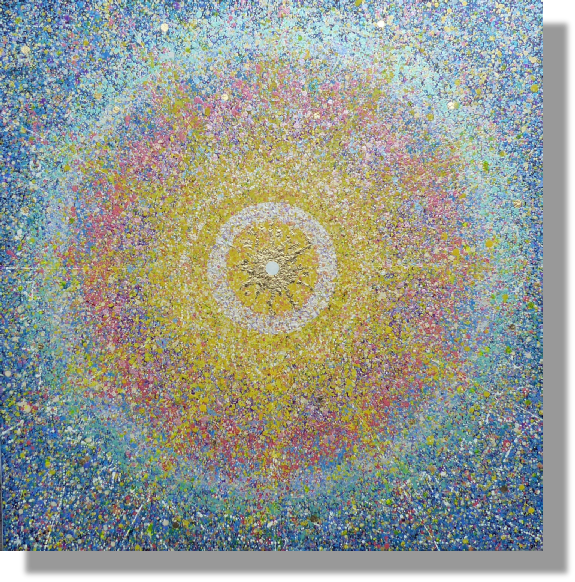
LUX E TENEBRIS
TITLE: LUX E TENEBRIS
(Light out of darkness)
Artist: NIGEL GROOM
Medium: Acrylic/Acrylic ink/gold leaf
Dimensions: 90cmsx90cms
Date: September 2021
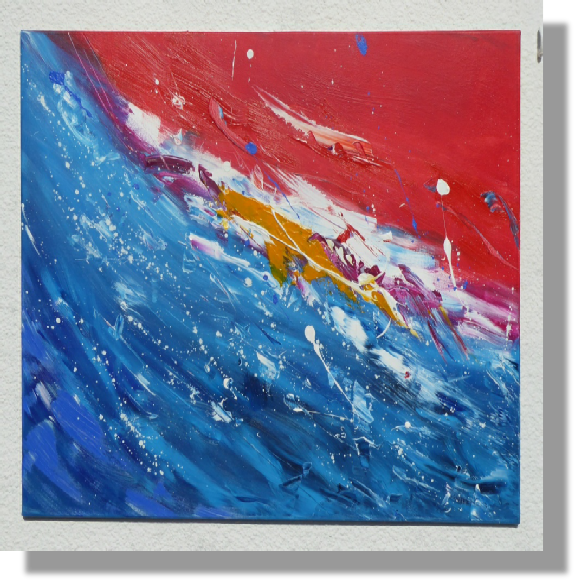
Artist: Nigel Groom
Medium: Acrylic on canvas
Dimensions: 100cmsx70cms
Date: 0ctober 2021
WATER MUSIC No.5
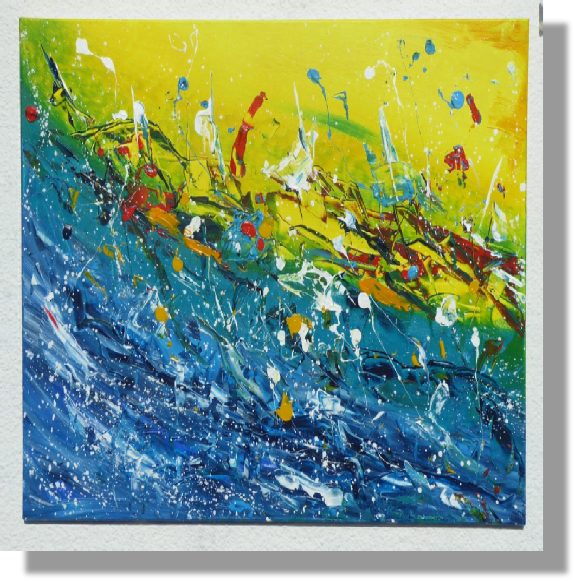
Artist: Nigel Groom
Medium: Acrylic on canvas
Dimensions: 100cmsx70cms
Date: 0ctober 2021
WATER MUSIC No.6
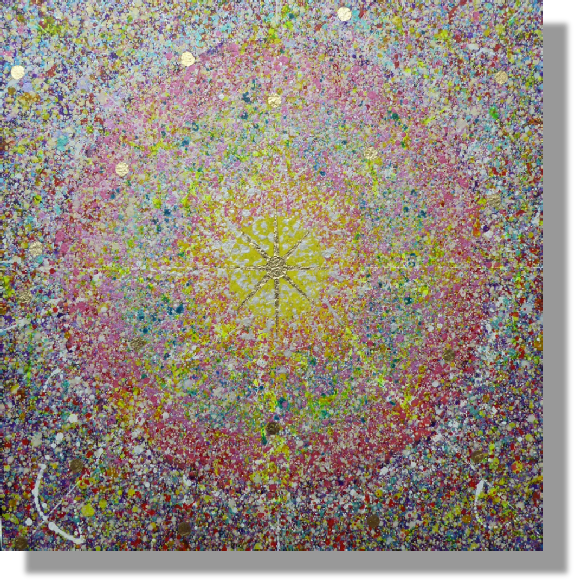
TITLE: LUCE SACRA (SACRED LIGHT)
(….a deep and dazzling darkness….)*
ARTIST: NIGEL GROOM
Medium: Acrylic/acrylic ink/gold leaf
Dimensions: 60cmsx60cms
Date: August 2021
*Attributed to poet and mystic Henry Vaughan
A gift for a dear friend
LUCE SACRA (SACRED LIGHT)
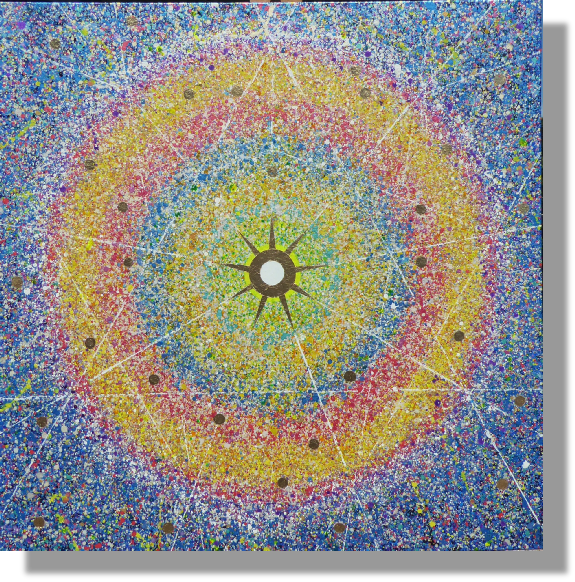
TITLE: DIES NATALIS
(Birthday)
ARTIST: Nigel Groom
Medium: Acrylic/acrylic ink/gold leaf
Dimensions: 90cmsx90cms
Date: 2021
(Private commission for a birthday celebration)
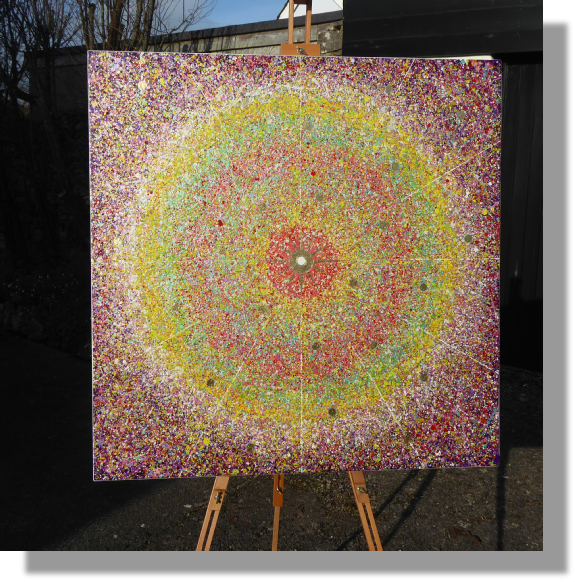
TITLE: DONUM DATUM EST
(The Gift is Given)
ARTIST: Nigel Groom
Medium: Acrylic/acrylic ink/gold leaf
On deep edge canvas
Dimensions: 90cmsx90cms
Date: November 2021
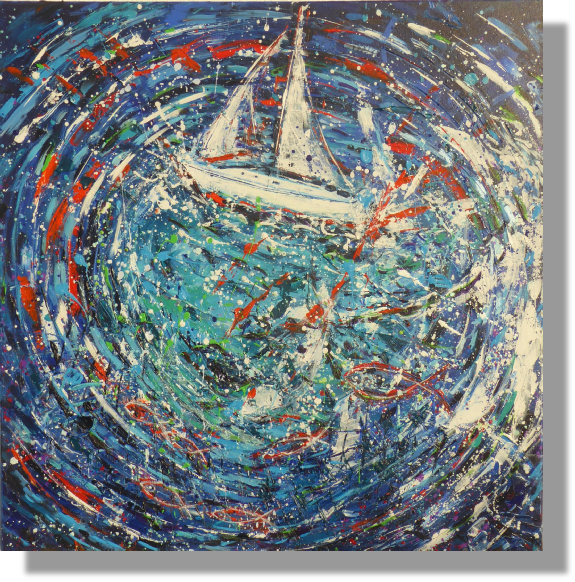
TITLE: GREY WOLF UNDER SAIL
ARTIST: NIGEL GROOM
Medium: Acrylic/acrylic inks on deep edge canvas
Dimensions: 90cmsx90cms
Date: December 2021
(Private commission)